

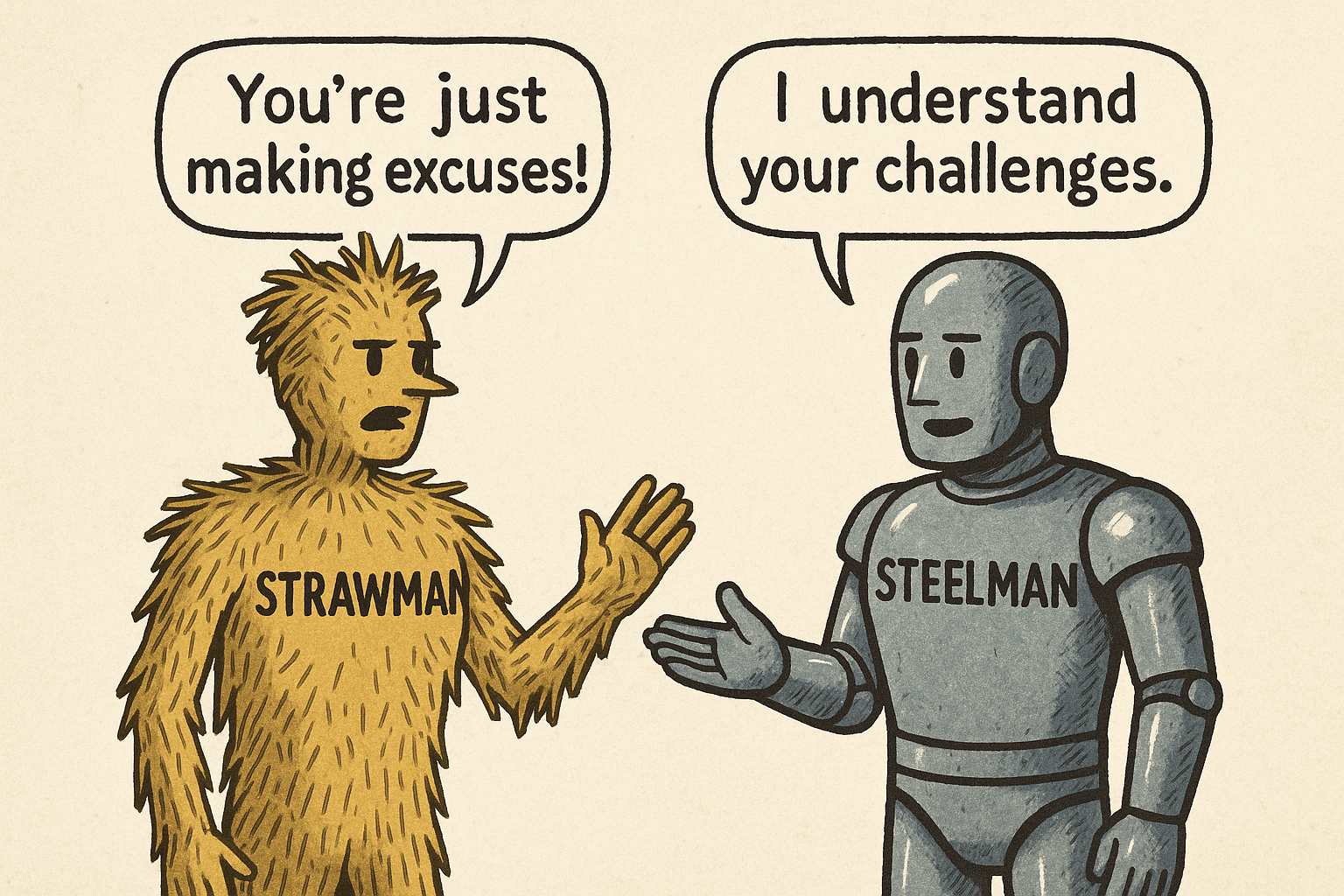

In both fitness and leadership, how we think shapes how we act. One of the clearest signs of mental discipline and a strong mind is how we engage with ideas we don’t fully agree with.
Too often, we respond to differing opinions with knee-jerk reactions, especially when the pressure is on or the conversation feels personal. That’s where two important tools come into play: the strawman and the steelman. Learning to spot the first and practice the second is like upgrading your mental operating system, giving you the clarity and self-control to lead with integrity.
What’s a Strawman?
A strawman argument is a logical fallacy where someone misrepresents or oversimplifies another person’s viewpoint to make it easier to refute. It’s like building a scarecrow… something that looks like the real thing from a distance, but falls apart with a stiff breeze.
Example (Strawman):
“You think people should go to the gym every day? So we should all just forget our responsibilities and become fitness-obsessed?”
This exaggeration distorts a reasonable statement (“people should move their bodies regularly”) into something extreme and dismissive. It makes the original idea look foolish instead of actually engaging with it.
Strawman arguments are common in everyday conversations, especially on social media or in heated debates. But they shut down growth. They don’t sharpen your thinking, they insulate it.
What’s a Steelman?
A steelman argument is the opposite. It’s the practice of intentionally strengthening someone else’s perspective, even if you disagree, by presenting it in the most fair, logical, and generous way possible.
Why would you do that?
Because steelmanning someone’s argument does two powerful things:
-
It builds empathy and respect, even when you disagree.
-
It sharpens your own perspective, forcing you to think clearly and respond with strength, not ego.
Steelman Example: The “No Time to Exercise” Objection
Let’s say you’re encouraging someone to commit to a basic physical fitness routine. They say:
“I’d love to work out more, but I just don’t have the time.”
You could dismiss this by saying,
“That’s just an excuse. If it mattered to you, you’d make time.”
That’s a strawman… it ignores the complexity of someone’s life and dismisses their very real challenges.
Instead, let’s steelman the argument:
“You’re saying that with work, family, and other responsibilities, your schedule feels completely maxed out. The idea of carving out 45 minutes a day for fitness feels overwhelming, even if you know it’s important. You’re not against working out… you’re trying to figure out how to make it fit into a demanding life without dropping the ball on things that matter to you.”
Now that’s a fair and generous restatement. It demonstrates that you’ve truly listened. And once that’s acknowledged, you’re in a better place to collaborate on solutions.
For example:
“What if we reframed what counts as a workout? Could we explore short bursts of intentional movement… 10 to 15 minutes a few times a day… as a starting point?”
You haven’t compromised your values. You’ve led with understanding. That’s intellectual fitness in action.
Final Reps
In a world that often rewards hot takes and quick comebacks, it takes maturity to slow down, steelman the opposing view, and engage with depth. Whether you’re leading a team, coaching a client, or just trying to become a better thinker, this practice builds the kind of strength that matters: not just being right, but being real and being effective.
Strawmen fall apart under pressure. Steelmen build bridges.
Which one are you building?