
Strong Legs, Strong Mind: What Leg Power Can Teach Us About Healthy Aging

Strong Legs, Strong Mind: What Leg Power Can Teach Us About Healthy Aging
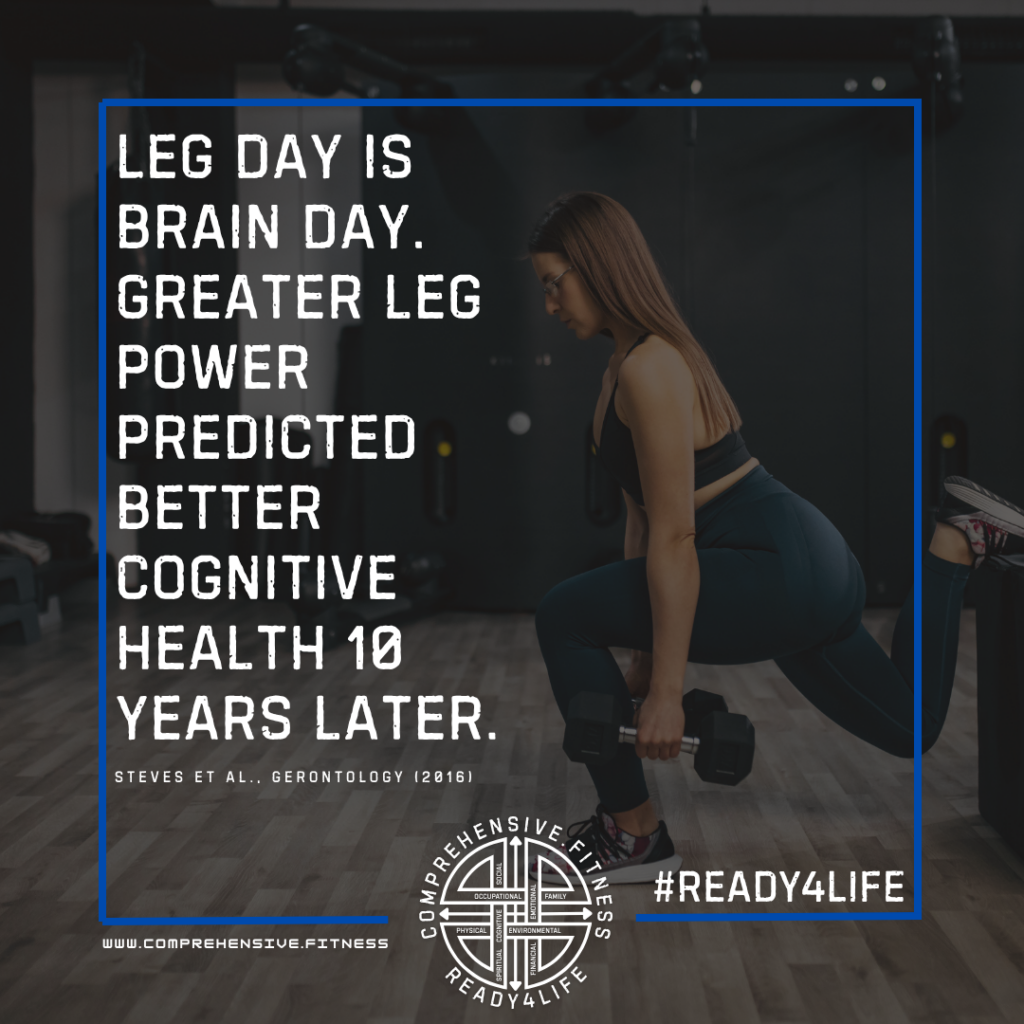
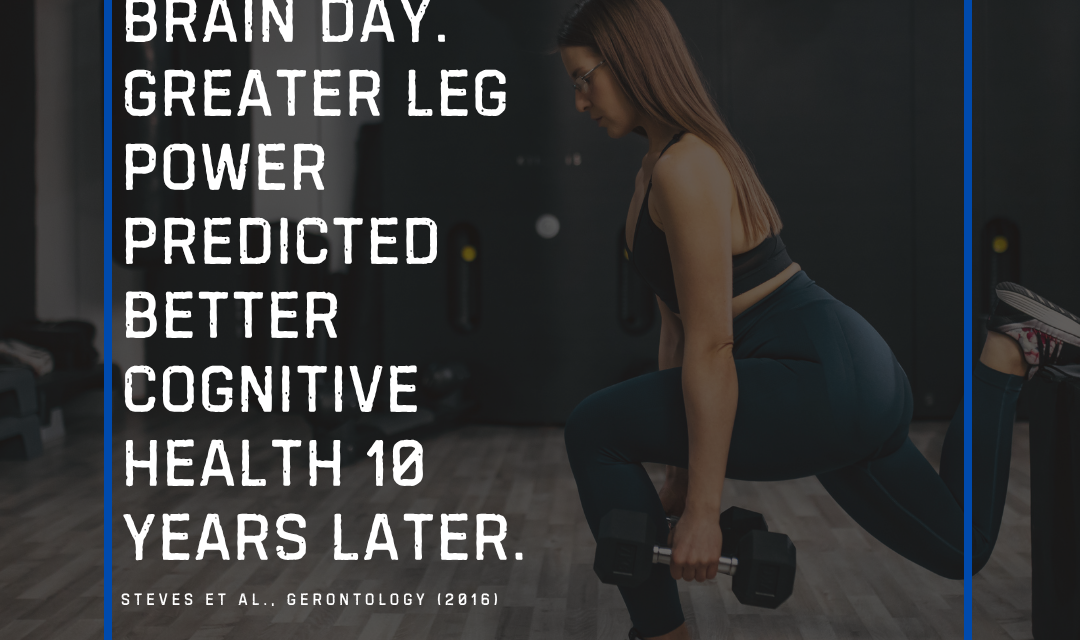
When most people think about brain health, they think about crossword puzzles, reading, learning new skills, or staying socially engaged. While all of those things matter, a fascinating long-term study suggests we may be overlooking something much simpler:
The strength and power of our legs.
Researchers followed 324 healthy women over a 10-year period to better understand what factors influence cognitive aging. At the beginning of the study, participants completed a variety of physical and cognitive assessments, including a measure of leg power, the ability to generate force quickly with the lower body.
Ten years later, the results were striking.
Women who demonstrated greater leg power at the start of the study experienced less cognitive decline over the following decade. In fact, leg power proved to be a stronger predictor of cognitive health than many other lifestyle and health factors examined by the researchers.
The findings became even more interesting when researchers looked at identical twins. Because twins share genetics and much of their early-life environment, they provide a unique opportunity to separate nature from nurture. Even among twin pairs, the stronger twin generally experienced better cognitive outcomes than her sister.
Brain imaging told a similar story.
Participants with greater leg power showed larger amounts of gray matter and healthier overall brain structure years later. The researchers concluded that muscular fitness, particularly lower-body power, appears to be closely linked to healthy cognitive aging.
So what does this mean for the rest of us?
It does not mean that stronger legs guarantee protection from dementia or cognitive decline. This was an observational study, not a controlled exercise intervention. However, it adds to a growing body of evidence showing that movement and physical fitness are deeply connected to brain health.
Perhaps more importantly, it reminds us that fitness is about far more than appearance.
The ability to walk, climb stairs, rise from a chair, carry groceries, hike a trail, or simply move through life with confidence depends heavily on lower-body strength and power. Those same physical qualities may also help support the health of the organ that controls everything else, the brain.
The practical takeaway is simple.
Keep moving.
Walk regularly. Strength train. Climb stairs. Squat. Lunge. Hike. Ride a bike. Find activities that challenge your legs and encourage you to produce force, maintain balance, and move with purpose.
We often think of exercise as something we do for our muscles, our waistline, or our heart.
This research suggests we should also think of it as something we do for our future mind.
Reference
Steves, C. J., Mehta, M. M., Jackson, S. H. D., & Spector, T. D. (2016). Kicking Back Cognitive Ageing: Leg Power Predicts Cognitive Ageing after Ten Years in Older Female Twins. Gerontology, 62(2), 138-149.
https://doi.org/10.1159/000441029