


How Sound Affects Well-Being: The Environment We Hear
Environmental Fitness isn’t just about removing what bothers us. It’s also about creating conditions that help us thrive.
Think about the sounds around you right now. Traffic outside your window. Conversations nearby. Music playing in the background. Maybe birds singing or rain falling.
How often do you consider how those sounds affect your mood, concentration, or ability to relax?
What Research Says About Sound and Well-Being
A systematic review and meta-analysis published in October 2026 in npj Urban Sustainability examined 194 studies exploring how different sound environments relate to human well-being.
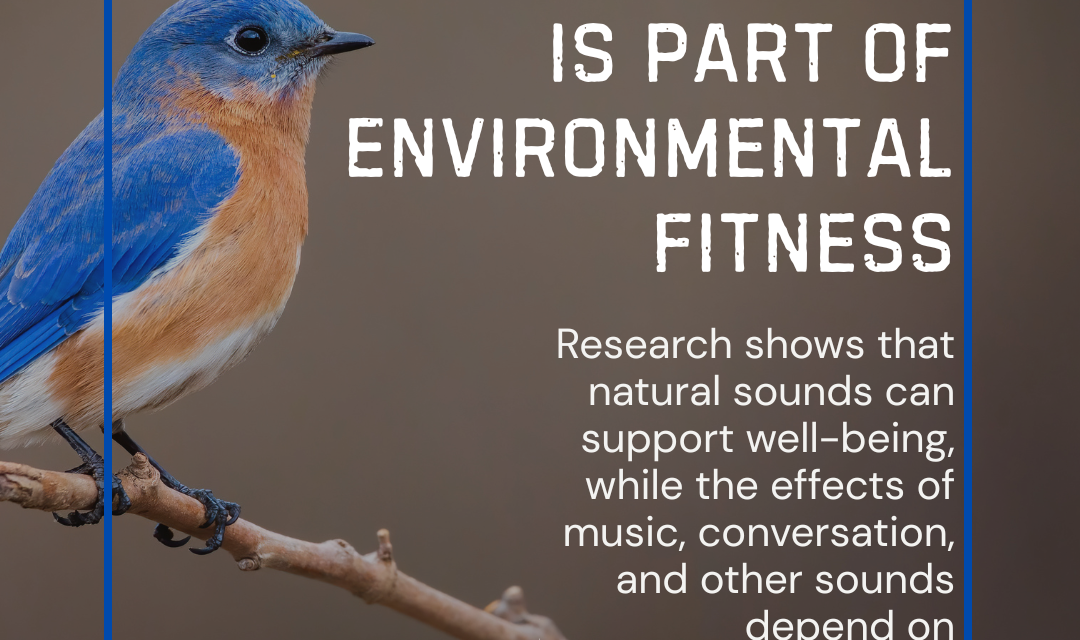
Researchers found that natural sounds, such as birdsong and flowing water, generally had positive effects on the well-being outcomes studied.
But here’s where it gets interesting.
Human-produced sounds, including music and conversation, also showed potential benefits, particularly for social experiences. However, those benefits depended heavily on the situation.
Think about it. Music that makes a gathering more enjoyable might make it harder to concentrate while working. A lively conversation can strengthen social connections, but that same conversation might interrupt someone trying to rest.
The goal isn’t necessarily less noise. It’s a better sound environment for what we’re trying to accomplish.
Creating a Healthier Sound Environment
That’s an important distinction in Environmental Fitness.
We often focus on eliminating problems: reducing clutter, limiting distractions, or removing hazards. Those things matter, but we can also intentionally create surroundings that support our needs.
Maybe that means opening a window to hear the birds, taking a walk somewhere peaceful, enjoying music with friends, or finding a quiet place to think.
The research doesn’t suggest that any particular sound will improve everyone’s health. Many studies examined short-term effects, and individual preferences matter.
Still, it gives us something worth considering.
What do the sounds around you make easier, and what do they make more difficult?
Sometimes improving our environment begins with paying attention to something we’ve learned to tune out.
Fit for Function, Ready for Life.
Research: Beyond Noise and Silence: Urban Soundscapes and Human Well-Being, npj Urban Sustainability (2026).