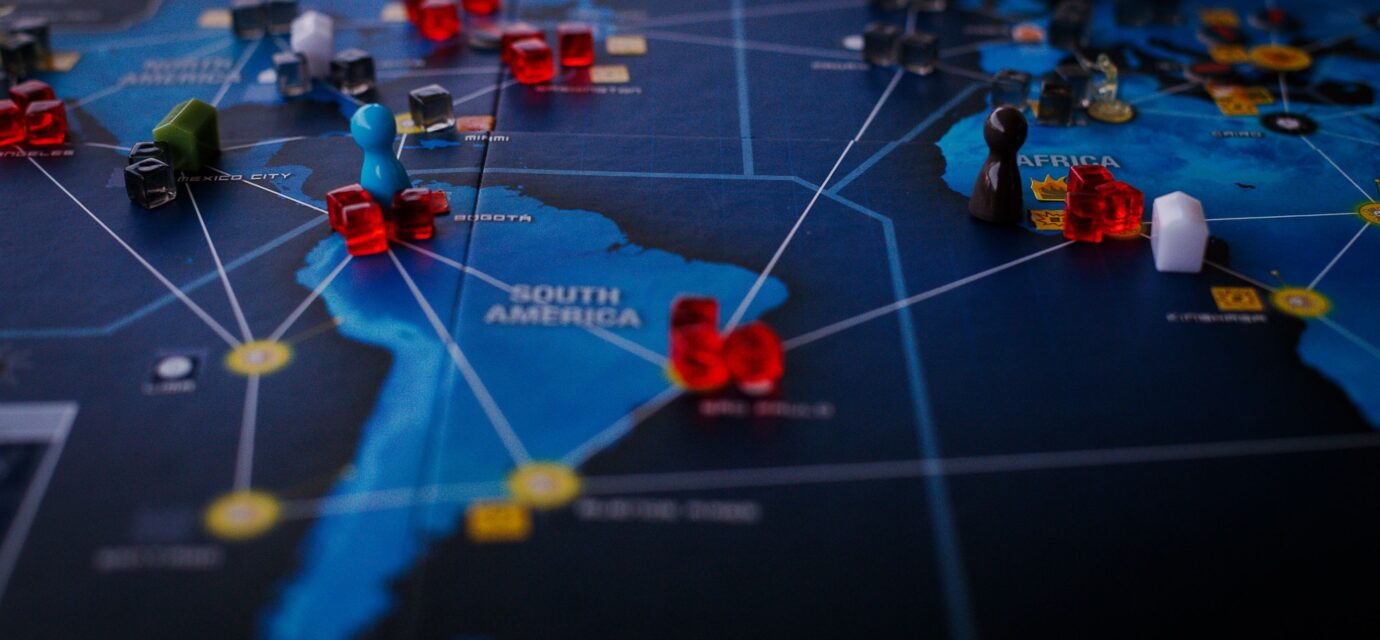

I pay attention to what is happening in the world because some of it concerns me, and because being informed helps me feel better prepared for whatever comes next.
That probably isn’t surprising. I spent most of my adult life in the military. I still work closely with public-safety professionals.
For a long time, I probably would have thought about that mostly in terms of readiness. My military background certainly influences what catches my attention, and I have enough of a prepper’s heart that I want to know when something doeI want to understand what is happening in the world without allowing the constant stream of information to consume me. I’ve built a simple system using AI, verification, PIRs, CCIRs, and different time horizons to stay informed. For me, that’s not just situational awareness. It’s part of Intellectual Fitness and being Fit for Function and Ready for Life.sn’t look quite right. I want to be ready.
But I also see all of this through the lens of Comprehensive Fitness.
Being Fit for Function and Ready for Life extends well beyond physical fitness. What I choose to pay attention to exercises my Intellectual Fitness. How I manage uncertainty and concern draws on my Emotional Fitness. What I learn can influence how I prepare and care for my family, the conversations I have with others, and decisions I make in my work.
The challenge isn’t convincing myself to pay attention. I already do that.
The challenge is figuring out how to stay informed without allowing the constant stream of information to consume more time, attention, and emotional capital than it deserves.
That’s where I’ve increasingly turned to AI as a virtual assistant.
I like knowing what’s going on. But I don’t like how keeping up with all of it consumes me and makes me feel.
I don’t really watch the news.
I don’t wake up and turn on a cable network. I don’t deliberately consume one newspaper or news outlet every morning. And I definitely don’t want to spend hours scrolling through everything that happened overnight.
Instead, I’ve built a process.
Each morning, I have a virtual assistant scan broadly across reputable reporting, government sources, military sources, international reporting, and other information streams. I ask it a pretty simple question:
What actually changed?
The threshold is intentionally high. I don’t need every headline. I want the things that might materially change how I understand the world.
Then I verify.
If something catches my attention, I go back to original reporting or additional sources. I ask questions. I look for competing explanations. Sometimes I discover that the first report was incomplete or wrong. Sometimes something that looked important turns out to be noise.
Other times, something sticks.
PIRs and CCIRs keep things focused
When that happens, I may turn it into what we call a PIR, or Priority Intelligence Requirement. That’s just a formal way of saying, This matters enough that I want to keep watching it.
I also use CCIRs, Commander’s Critical Information Requirements, to identify information important enough that it could affect a decision. I borrowed the framework from my military experience, but I’ve adapted it considerably for my own life.
I’m not commanding anything.
I’m trying to make better decisions.
Some things stay on the list for a few days. Others stay for months. Some eventually disappear because the evidence doesn’t support what originally caught my attention.
That’s important too.
The goal isn’t to prove that my concern was justified.
The goal is to understand what’s actually happening.
I’ve also started looking at information through different time horizons. Every morning I ask what changed during the previous 24 hours. I look “left of bang” for weak signals that might be developing before something happens. And once a week, I look backward across the previous 30 days for things that didn’t seem important when they first happened but look different with the benefit of time.
It’s essentially a personal situational-awareness system.
And I think it belongs here.
Not because Comprehensive Fitness is becoming a foreign-policy website. It isn’t.
It belongs here because this is part of my Intellectual Fitness training plan.
It affects my Emotional Fitness because I have to recognize when awareness starts becoming anxiety or information overload.
It affects my Family Fitness because some of the things I’m watching influence travel, preparedness, finances, and conversations with the people I love.
It affects my Social Fitness because these things become part of conversations with friends and colleagues.
And it intersects with my Occupational Fitness because I work in environments where understanding what is changing in the world can matter.
The challenge is figuring out how to remain informed without allowing information to consume me.
That’s what I’m experimenting with.
So I’m going to start sharing a very simple post each week.
Not a news roundup.
Not predictions.
Not “here’s what you should be worried about.”
Just: Here are a few things that caught my attention this week, why I noticed them, what I think I understand, and what I’m still watching.
Sometimes I’ll be wrong. Hopefully, when I am, I’ll tell you that too.
Because noticing something doesn’t require reaching a conclusion about it.
That’s probably the larger lesson I’m learning from this whole experiment.
Pay attention. Stay curious. Verify what matters. Notice what you notice. Then go live your life.
That’s part of being Fit for Function and Ready for Life too.